Blog
What CLIA Certification Means and Why It Should Matter to Your Facility
Medically Reviewed by the Clinical Team at MD Diagnostics
CLIA-Certified Laboratory
When evaluating a laboratory partner, CLIA certification is one of the first qualifications to verify. It is not a marketing designation or an optional credential. It is a federal requirement, and what it represents about a laboratory's operating standards has direct implications for the quality and reliability of every test result your facility depends on.
Understanding what CLIA certification actually means, what it requires, and how it should factor into your evaluation process will help you make better decisions about the laboratory relationships that support your patient care.
What CLIA Stands For
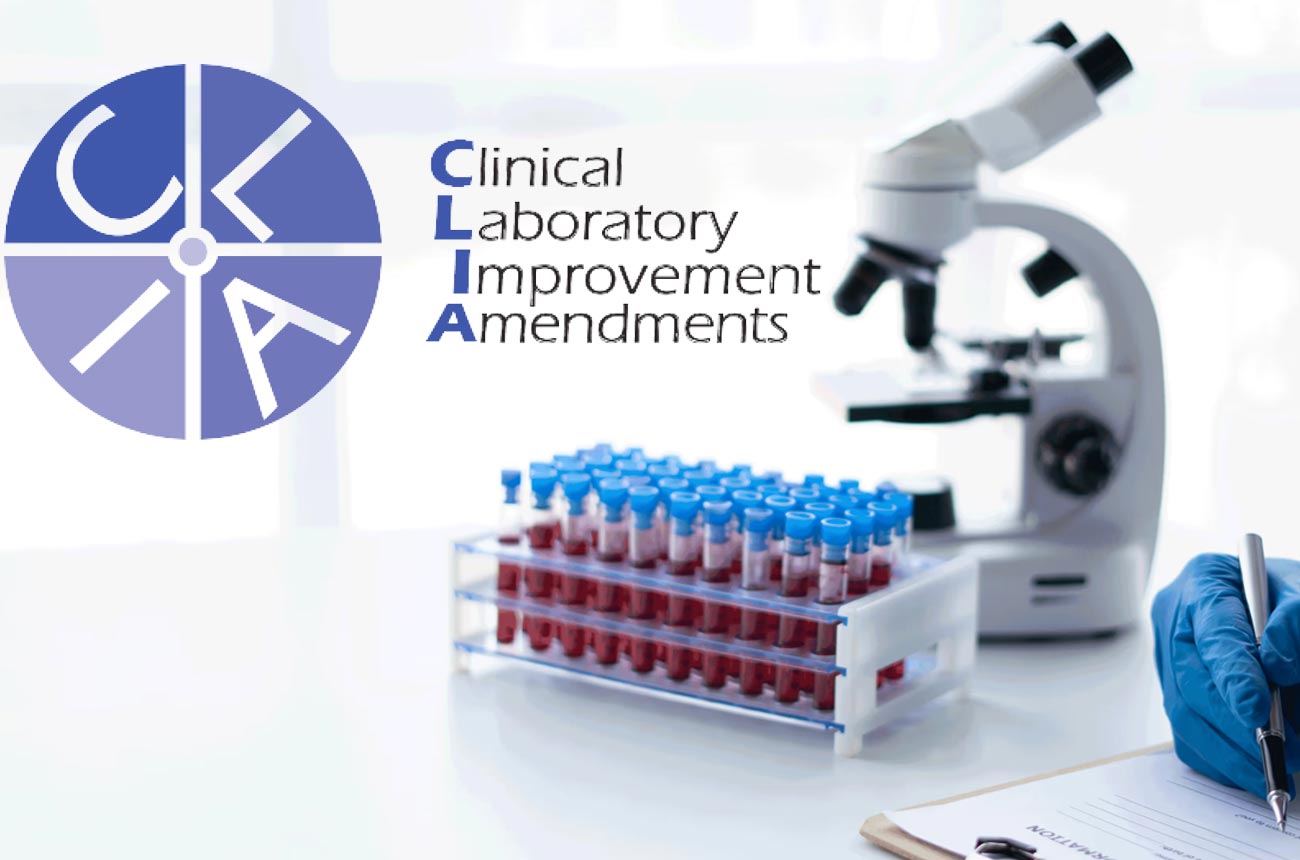
CLIA stands for the Clinical Laboratory Improvement Amendments, a set of federal regulations enacted in 1988 and administered by the Centers for Medicare and Medicaid Services (CMS) in conjunction with the Food and Drug Administration (FDA) and the Centers for Disease Control and Prevention (CDC).
The law established quality standards for all laboratory testing performed on human specimens in the United States, with the goal of ensuring that test results are accurate, reliable, and timely regardless of where the testing takes place.
In practical terms, any facility that tests human samples for diagnosis, prevention, or treatment of a health condition must obtain a CLIA certificate, unless it falls under a specific exemption.
What CLIA Certification Actually Requires
CLIA operates on a tiered system based on the complexity of the testing a laboratory performs. The three primary certificate types are:
- Certificate of Waiver: Issued for simple, low-risk tests that require minimal training and have a low potential for error if performed incorrectly. Examples include basic dipstick urinalysis and blood glucose monitoring using approved devices.
- Certificate for Provider-Performed Microscopy (PPM): Issued for moderate-complexity tests performed by a physician or midlevel practitioner during a patient examination.
- Certificate of Compliance or Accreditation: Required for laboratories performing moderate- to high-complexity testing. These facilities undergo either CMS inspection or inspection by an approved accreditation organization. The requirements are significantly more rigorous.
A full-service diagnostic laboratory like those supporting physician clinics, long-term care facilities, and pain management centers operates under the certificate of compliance or accreditation pathway. This is the level of certification that carries the most meaningful quality assurance implications.
What Inspections and Ongoing Requirements Look Like
For laboratories certified at the moderate- to high-complexity level, maintaining CLIA certification is an ongoing responsibility, not a one-time approval. Requirements include:
- Personnel standards: CLIA specifies qualification requirements for laboratory directors, technical supervisors, clinical consultants, and testing personnel based on test complexity. A high-complexity lab cannot simply place any staff member at the bench.
- Quality control procedures: Laboratories must run controls with each test batch to verify that equipment and reagents are performing within acceptable ranges. Results that fall outside control limits are investigated and documented.
- Proficiency testing: Laboratories performing regulated analytes must participate in an approved proficiency testing program. Samples of unknown composition are periodically sent to the lab for testing, and results are evaluated against peer laboratories. Consistent failures can result in sanctions.
- Patient test management: Protocols must be in place for proper specimen collection, labeling, transport, processing, and reporting. Chain of custody and documentation standards are part of ongoing compliance.
- Inspections: CMS or approved accrediting organizations conduct periodic unannounced or scheduled inspections of the laboratory's physical operations, documentation, personnel records, and quality systems.
This structure means that a CLIA-certified laboratory at the full compliance level is operating under continuous regulatory oversight, not a certificate issued and then forgotten.
Why This Should Matter to Your Facility
When your clinic or facility relies on laboratory results to make treatment decisions, identify infections, monitor patient conditions, or satisfy compliance requirements, the accuracy and reliability of those results is not incidental. It is foundational.
Working with a laboratory that is not appropriately certified, or one that holds only a waiver certificate for a limited set of tests, creates risk. It creates risk for patient outcomes when incorrect results drive incorrect decisions. It creates risk for regulatory compliance when facilities subject to CMS oversight are using laboratory data that cannot meet documentation or quality standards. And it creates liability exposure when the accuracy of a test result becomes the subject of a clinical or legal dispute.
CLIA certification at the appropriate complexity level is the baseline confirmation that a laboratory has been independently verified to meet federal standards for the testing it performs.
Questions to Ask When Evaluating a Laboratory Partner
Knowing that CLIA certification matters is useful. Knowing how to verify it and what follow-up questions to ask makes your evaluation more practical.
- What is your CLIA certificate number and certificate type? A legitimate laboratory will provide this immediately and without hesitation. You can verify certification status directly through the CMS CLIA database, which is publicly accessible.
- Are you accredited by an external organization? Some laboratories go beyond basic CLIA compliance and pursue accreditation from organizations such as CAP (College of American Pathologists) or AABB. These programs carry additional requirements and provide a higher level of independent oversight.
- What is your proficiency testing participation record? Ask whether the laboratory has had any proficiency testing failures and how they were addressed. A transparent laboratory will be able to discuss this without defensiveness.
- What complexity levels are you certified to perform? Match the lab's certification level to the complexity of what they will be testing for your facility. A laboratory certified only for waived tests should not be performing high-complexity molecular panels.
- What are your turnaround time standards for routine and STAT testing? Certification ensures accuracy, but your facility also depends on speed. CLIA certification does not regulate turnaround time, so this is a separate performance question you need to ask directly.
Frequently Asked Questions
Is CLIA certification the same as accreditation?
Not exactly. CLIA certification is a federal regulatory requirement. Accreditation is an additional layer of voluntary or required oversight from an independent organization like the College of American Pathologists. Some accreditation organizations are approved by CMS to serve as alternatives to direct CMS inspection, meaning an accredited lab satisfies CLIA requirements through that program. Accreditation generally signals a higher standard than basic CLIA compliance alone.
Can I verify a laboratory's CLIA certification myself?
Yes. The CMS online CLIA database allows you to search for any CLIA-certified laboratory by name, city, state, or certificate number. The database shows certificate type, expiration date, and any compliance history. Verifying a laboratory's certification before entering a partnership agreement is straightforward and takes only a few minutes.
What happens if a laboratory loses its CLIA certification?
A laboratory that loses its CLIA certification is no longer legally permitted to perform diagnostic testing on human specimens. Facilities relying on that laboratory would need to transition immediately, and any results produced during a period of non-compliance could be subject to regulatory scrutiny.
Does CLIA certification apply to point-of-care testing done in a clinic?
Yes, with important nuances. Any facility that performs its own testing on human specimens, even rapid tests performed in a clinical office, must hold the appropriate CLIA certificate for those tests. Many rapid tests fall under the waiver category and carry relatively simple certification requirements, but the requirement to hold some form of CLIA certificate does apply.
Does CLIA certification cover drug testing?
Yes. Drug testing performed on human specimens is subject to CLIA requirements. For federally mandated workplace drug testing programs, additional oversight from the Substance Abuse and Mental Health Services Administration (SAMHSA) applies, but CLIA certification remains a baseline requirement for the laboratory performing the analysis.
Conclusion
CLIA certification is not a selling point to be evaluated alongside other features. It is a foundational requirement that tells you whether a laboratory is operating under federal quality standards and subject to ongoing oversight. For facilities making clinical decisions, managing compliance obligations, or placing trust in laboratory data, it is the starting point of any responsible evaluation.
Understanding what CLIA certification requires, what each certificate level means, and how to verify and follow up gives you the tools to build laboratory partnerships on solid ground.
MD Diagnostics is a CLIA-certified laboratory serving physician clinics, long-term care facilities, pain management centers, and employers throughout the St. Louis region. Contact our team to learn how our certified testing services can support your facility.
This article is for informational purposes only and does not constitute medical advice. Always consult with your healthcare provider about your specific health concerns and lab results. MD Diagnostics is a CLIA-certified laboratory providing diagnostic testing services in the St. Louis region.