
Blog
Pain Management Drug Test: Why It's Ordered and What It Checks
Medically Reviewed by the Clinical Team at MD Diagnostics
CLIA-Certified Laboratory
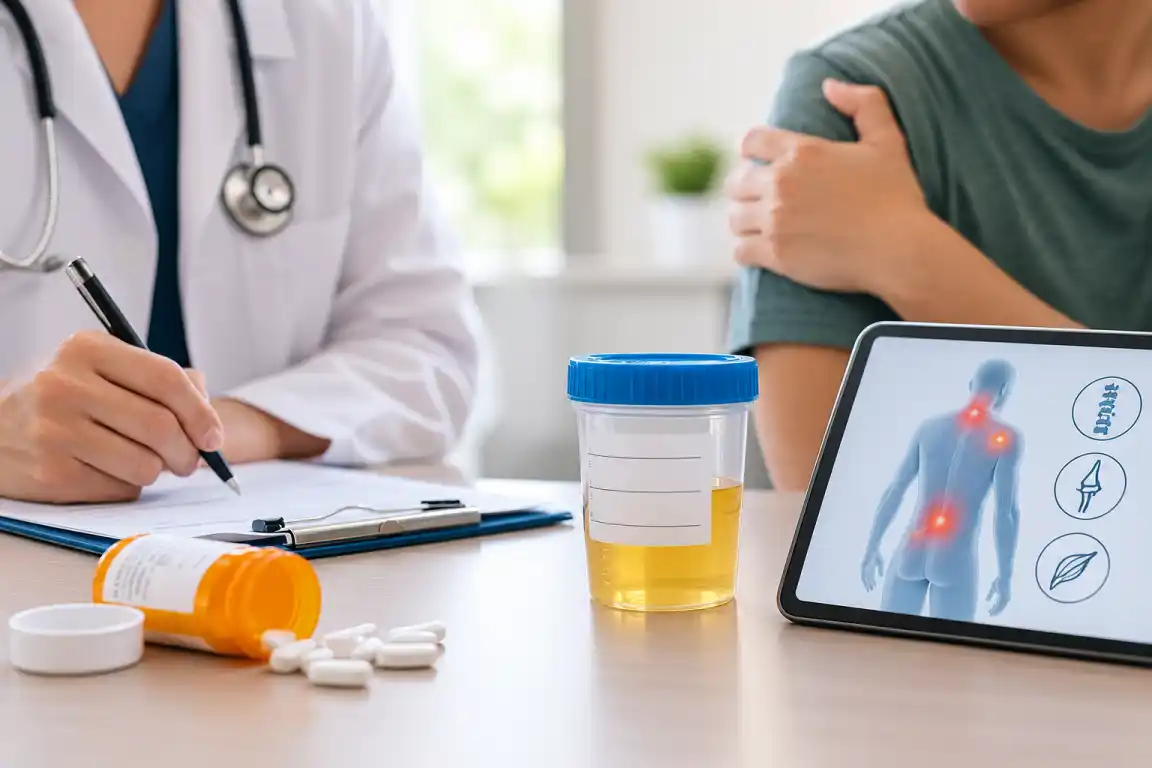
Your provider hands you a specimen cup at the start of an appointment, and something in your stomach drops a little. You came in because you are in pain, not because you did anything wrong, and now it feels like someone is checking up on you. If that has been your experience, you are far from alone. A pain management drug test is one of the most common parts of care at a pain clinic, and it tends to feel more personal than it is.
The test is routine for nearly every patient on certain prescriptions, and it exists mainly to keep treatment safe. Here is why pain clinics order it, what a pain management drug screen actually checks for, and what happens when a result does not look the way anyone expected.
Why Pain Clinics Test: Safety, Agreements, and Monitoring
Pain management clinic drug testing follows from the kind of medications often used in treatment. Opioids and several other controlled medications help many people, and they also carry real risks, especially when they are combined with other substances. Testing is one of the few objective tools a clinician has to see what is actually in the body, which is why it shows up in almost every clinic's routine. Clinical guidelines for prescribing opioids encourage providers to consider drug testing before treatment starts and periodically afterward.
Medication safety. Mixing opioids with alcohol, sedatives, or certain other substances can slow breathing and raise the risk of overdose. A test can reveal a combination the provider did not know about, which gives them a chance to adjust the plan before anything goes wrong.
Treatment agreements. Many clinics ask patients to sign a treatment agreement, sometimes called a pain contract, that explains how medications will be prescribed and monitored. Drug testing is usually written into that document, so it is an expectation set at the start and not a surprise added later.
Monitoring over time. One result says very little. Repeated testing builds a picture of whether a medication is being taken as prescribed, which helps the provider judge whether the dose is working. It also helps a clinic confirm that a medication is being used by the person it was prescribed for.
What Does a Pain Management Drug Screen Test For?
Panels vary by clinic and by what each patient has been prescribed, but most are built around two questions. Is the prescribed medication there, and is anything else there that the provider needs to know about? A typical panel may include:
- The opioid or other controlled medication you have been prescribed, along with its breakdown products
- Other opioid medications that were not prescribed
- Benzodiazepines and other sedatives
- Stimulants such as amphetamines
- Marijuana and other illicit drugs
- Alcohol markers, on some panels
Results generally fall into a few plain categories. The most common outcome is a result that matches the prescription, with the expected medication present and nothing unexpected. When the prescribed medication is absent, the explanations can be ordinary ones, such as missed doses, running out early, or taking it on a different schedule than the provider assumed. When a substance shows up that was not prescribed, something else was in the system, and that is a reason for a conversation, not a conclusion.
First screens can also be misleading. Some foods and medications can trigger a presumptive result, and poppy seeds are the classic example. That is one of the main reasons a result is checked again before anyone acts on it.
What Happens After a Result, and Why a Flag Is Not an Accusation
The first screen, usually a quick immunoassay, is a presumptive test. It is built to be fast and sensitive, which means it can occasionally react to something that is not what it appears to be. Confirmation exists for that reason. A confirmatory test uses a more precise method, typically liquid chromatography with mass spectrometry, known as LC/MS, to identify the specific compounds present. At MD Diagnostics, every presumptive positive is confirmed in-house with LC/MS, and most results come back within 24 to 48 hours.
From there, the process usually looks like this:
- The initial screen flags a result that does not match what the provider expected.
- The lab confirms or rules out the finding with LC/MS testing.
- The provider reviews the confirmed result alongside your prescriptions and history.
- You and your provider talk it through, which is where context matters most.
- The provider decides on next steps, which may include no change, an adjusted plan, more frequent monitoring, or connecting you with other support.
What happens at the last step depends on your clinic's policy and the specific result, so there is no single answer. In many clinics the first move is a conversation, and a flagged result is treated as information about how treatment is going and carries no accusation.
Two habits make the process smoother. Tell your provider about every medication, supplement, and over-the-counter product you take, since some can affect a screen. And ask your clinic at the start what its testing schedule is and what it does when a result is unexpected, so nothing about the process comes as a surprise.
A Drug Screen Is Part of Your Care Plan, Not a Verdict on You
Back to the cup in your hand. Testing is a safety check on a treatment that carries risks when things are not lined up, and it says nothing about whether you deserve pain relief. Patients who understand what the screen looks for and how results are confirmed often find the process far less stressful, and clinics that explain it clearly give people less to worry about. If you have questions about your own testing, bring them to your next visit. Your provider would much rather answer them than have you wonder in silence.
Frequently Asked Questions About Pain Management Drug Testing
Why do pain management clinics drug test patients?
Clinics test to keep treatment safe, to confirm that prescribed medications are being taken as directed, and to catch combinations with other substances that could be dangerous. It is routine monitoring for patients on controlled medications.
Will my prescribed medication show up on the test?
Yes, and that is the expected result. Providers compare the screen against your prescription, so seeing the medication you were prescribed is a good sign that the plan is working as intended.
How often will I be tested?
It depends on the clinic's policy, the medication, and your individual situation. Some clinics test at the start of treatment and then periodically, and some test at unannounced times. Ask your clinic what its schedule is.
What if my result is unexpected?
An unexpected screen result is usually confirmed with a more precise test such as LC/MS before anything is decided. Your provider will then review it with you in the context of your prescriptions and history.
Does a drug test mean my provider thinks I am misusing medication?
No. Testing is standard for patients on certain medications and is typically applied to everyone in the program, not just those who raise concern.
This article is for informational purposes only and does not constitute medical advice. Always consult with your healthcare provider about your treatment plan and testing questions. MD Diagnostics is a CLIA-certified laboratory providing diagnostic testing services in the St. Louis region.