
Blog
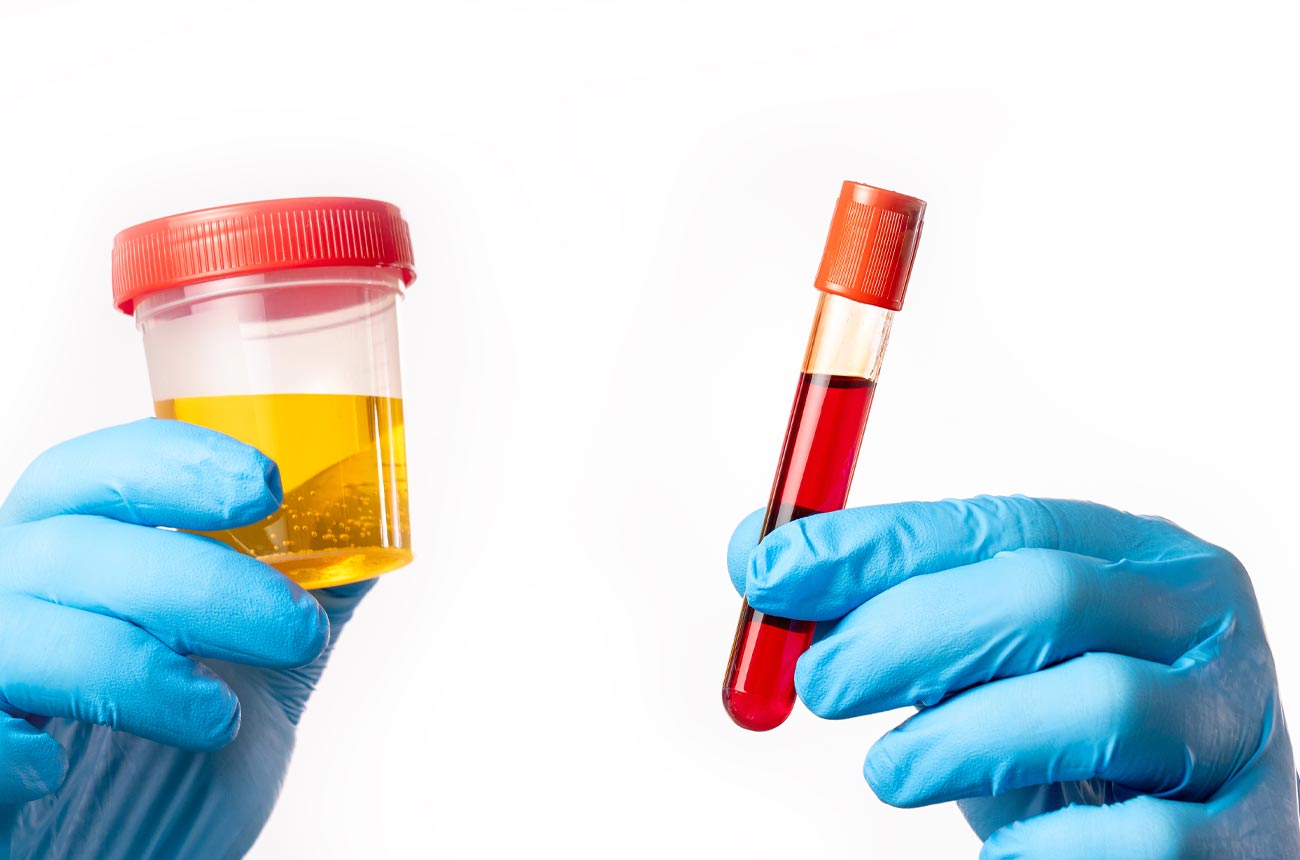
Blood Test vs. Urine Test: Which One Does Your Doctor Need and Why?
Medically Reviewed by the Clinical Team at MD Diagnostics
CLIA-Certified Laboratory
When your doctor orders lab work, you might wonder why it sometimes requires a blood draw and other times a urine sample. The difference is not arbitrary. Each type of test is designed to detect specific things, and the right choice depends entirely on what your physician is trying to find out.
Understanding the difference between a blood test and a urine test helps you know what to expect, how to prepare, and what kind of information your provider is working with when making clinical decisions.
What a Blood Test Is Designed to Do
A blood test analyzes a sample drawn directly from your bloodstream, usually from a vein in your arm. Because blood circulates throughout your entire body, it carries a wide range of information that reflects what is happening in your organs, tissues, and overall system at any given moment.
Physicians order blood tests to evaluate:
- Organ function, including the liver, kidneys, thyroid, and heart
- Blood cell counts and overall blood health
- Hormone levels, including testosterone, estrogen, cortisol, and thyroid hormones
- Cholesterol and triglyceride levels for cardiovascular risk assessment
- Blood glucose levels for diabetes screening and monitoring
- Protein levels, electrolytes, and metabolic markers
- Infections, immune system activity, and inflammatory markers
- Drug and medication levels in the bloodstream
Because blood reflects systemic conditions, it is often the right choice when your doctor needs a comprehensive picture of your overall health or suspects a condition that affects multiple body systems.
What a Urine Test Is Designed to Do
A urine test, also called a urinalysis, analyzes a sample you provide by urinating into a specimen cup. Urine is produced by the kidneys as they filter waste and excess materials from the blood, which means a urine sample reflects what your body is actively removing or excreting.
Physicians order urine tests to evaluate:
- Kidney function and urinary tract health
- Urinary tract infections caused by bacteria
- Presence of blood, protein, or glucose in the urine
- Dehydration and hydration status
- Drug use and substance detection through metabolite presence
- Pregnancy, through detection of human chorionic gonadotropin (hCG)
- Certain metabolic disorders that cause abnormal excretion patterns
Because urine reflects what the kidneys are filtering, it is particularly useful for evaluating urinary tract conditions, kidney health, and substances that the body is processing and eliminating over time.
Key Differences Blood Tests & Urine Tests
The most practical way to understand the difference is to look at what each test is best suited for and where it falls short.
Blood tests provide a real-time snapshot of what is circulating in your body right now. They are more sensitive for detecting systemic conditions, active infections in the bloodstream, and organ-level function. However, some substances, including certain drugs, clear from the blood relatively quickly, making timing an important factor.
Urine tests reflect what the body has been processing over a longer window of time. For drug testing, urine is often preferred because metabolites remain detectable in urine significantly longer than in blood. For urinary tract infections, urine is the direct source of the infection and provides a more relevant sample than blood in most cases.
Neither test is universally superior. The right test depends on the clinical question being asked.
When Doctors Order Both
In many clinical situations, a physician will order both a blood test and a urine test at the same visit. This is not redundant. The two tests are measuring different things, and together they provide a more complete picture.
Common scenarios where both are ordered include:
- A complete physical exam, where blood panels assess overall health and a urinalysis evaluates kidney and urinary tract function
- Diabetes management, where blood glucose and HbA1c are checked in blood while urine is tested for protein, which can indicate early kidney damage
- Suspected kidney disease, where blood creatinine measures filtration function and urine protein measures how well the kidneys are retaining what they should
- Certain drug testing protocols, where blood tests confirm active impairment and urine tests establish historical use
Ordering both is a way for providers to cross-reference results and reduce the chance of missing something important.
How to Prepare for Each Type of Test
Preparation requirements differ based on what is being tested, so always follow your doctor's specific instructions. In general:
For blood tests: Some panels require fasting for eight to twelve hours before the draw. This is particularly common for glucose, lipids, and metabolic panels. Others, like a complete blood count or thyroid test, typically do not require fasting. If you are unsure whether fasting is required, ask your provider or the lab before your appointment.
For urine tests: Most urine tests use a midstream clean-catch sample, meaning you begin urinating, then collect the middle portion of the stream. This reduces contamination from the urethra. For drug testing, collection protocols may be observed or unobserved depending on the clinical or compliance context.
Frequently Asked Questions
Is a blood test more accurate than a urine test?
Neither is universally more accurate. Each test is accurate for what it is designed to measure. A blood test is more accurate for detecting systemic conditions, organ function, and active infections in the bloodstream. A urine test is more accurate for detecting urinary tract infections, kidney-related issues, and substances the body has processed over time.
Can a urine test replace a blood test?
In most cases, no. They measure different things from different sources. A urine test cannot provide information about blood cell counts, heart function, or many hormonal levels. Conversely, a blood test is not the appropriate tool for diagnosing a urinary tract infection in most circumstances.
How long do results take?
Turnaround times vary depending on the test type and the laboratory. Many routine blood panels and basic urinalyses return results within the same day or the next business day. More specialized panels may take longer. If speed is clinically important, ask your laboratory about STAT processing options.
Why does my doctor sometimes order lab work without explaining why?
Physicians often order panels that screen for multiple conditions at once, even when there is no specific concern. Routine labs provide baseline data that helps detect changes over time and catch conditions early, before symptoms appear. If you want more clarity, it is always reasonable to ask your provider to explain what they are looking for and why.
Does it matter which laboratory processes my sample?
Yes. The quality of results depends on the laboratory's certifications, equipment, and processes. A CLIA-certified laboratory meets federal quality and accuracy standards for diagnostic testing. When choosing a lab, confirming their certification is an important step in ensuring reliable results.
Conclusion
Blood tests and urine tests each serve a distinct purpose. Blood tests provide a systemic view of what is happening inside your body at a given moment, while urine tests reflect what your body is filtering and eliminating over time. Physicians choose between them, or use both together, based on the specific clinical question they are trying to answer.
When your doctor orders lab work, it is always worth asking what they are looking for and why. Understanding the test helps you prepare appropriately and make sense of your results.
MD Diagnostics provides accurate, fast-turnaround blood and urine testing services for patients, clinics, and healthcare facilities throughout the St. Louis region. Contact our team to learn more about our diagnostic testing services.
This article is for informational purposes only and does not constitute medical advice. Always consult with your healthcare provider about your specific health concerns and lab results. MD Diagnostics is a CLIA-certified laboratory providing diagnostic testing services in the St. Louis region.